
Hand-dyeing wool yarn opens up a whole world of color, and there’s more than one way to do it. This post covers three approachable techniques. A snow-dyeing method gives a variegated, random look. Warp painting creates graduated stripes, and kettle dyeing produces smooth, even color. It also covers the basic equipment and safety habits worth building first.
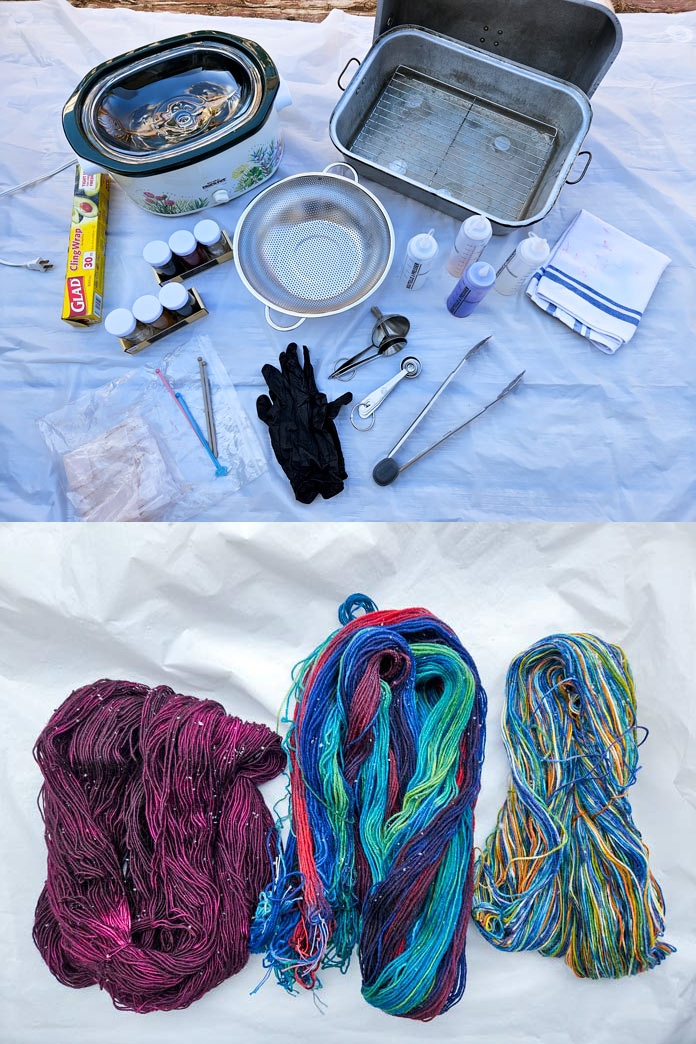
Dedicated equipment and tools for dyeing
materials
dye
- all-purpose fabric dye in powder form, in a few colors of choice
- all-purpose fabric dye in liquid form, in a color of choice
- vinegar, for setting dye on wool and other protein fibers
- salt, for setting dye on cotton and other cellulose fibers
yarn
- undyed wool-based sock weight yarn, ready to dye
- scrap cotton yarn, for soaking up leftover dye (optional)
equipment
- roasting pan and a cooling rack that fits inside it
- slow cooker
- stock pot and a colander for steaming
- measuring spoons, a funnel, and a measuring cup
- squeeze bottles for liquid dye and small jars for powdered dye
- stir sticks and tongs
- latex gloves and a dust mask
- a drop sheet or shower curtain liner, plus old towels
- a thermometer
- plastic zipper-locking bags and plastic wrap
- a bucket or tub for soaking yarn
- a container for scooping clean snow (for snow dyeing)
- a warping mill or loom (for warp painting)
Set up a dedicated dye space
Keep a set of equipment dedicated only to dyeing, separate from anything used for cooking. Thrift stores, dollar stores, and yard sales are great sources for a roasting pan, a cooling rack, a slow cooker, and a stock pot. Gloves and a mask protect hands and lungs while measuring and mixing powdered dye. A drop sheet or shower curtain liner protects the work surface, and old towels handle any spills.
Fiber content determines the setting agent. Vinegar sets dye on protein fibers like wool, alpaca, and silk. Salt sets dye on cellulose fibers like cotton and linen. Neither works on synthetic fibers, which need a different type of dye made specifically for them. Presoaking yarn in warm water with the right setting agent helps the dye take evenly. Plan on about an hour for this step before the real process begins.
Snow dye for a variegated look
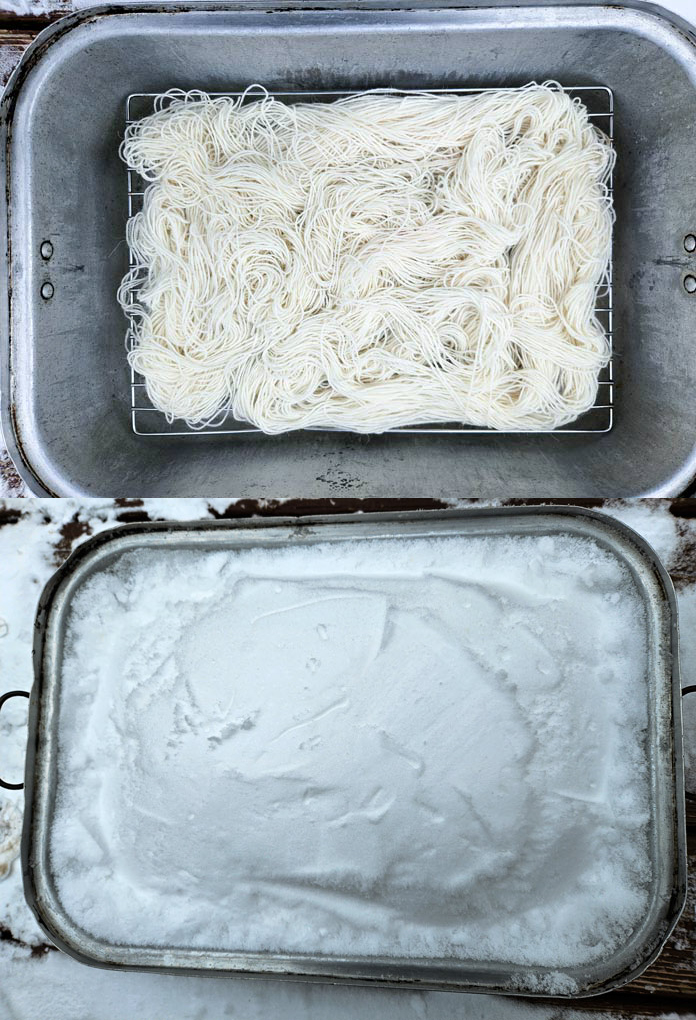
The soaked yarn spread out evenly over a raised rack in the bottom of the roasting pan
Snow dyeing starts with a soaked skein spread loosely over a raised rack inside an empty roasting pan. Pack clean snow on top of the yarn, pressing it down firmly. Sprinkle dye powder over the snow in loose zones of color, letting them meet and blend at the edges. Where colors overlap, new shades appear, like purple where red meets blue, or a fresh green where yellow meets teal.
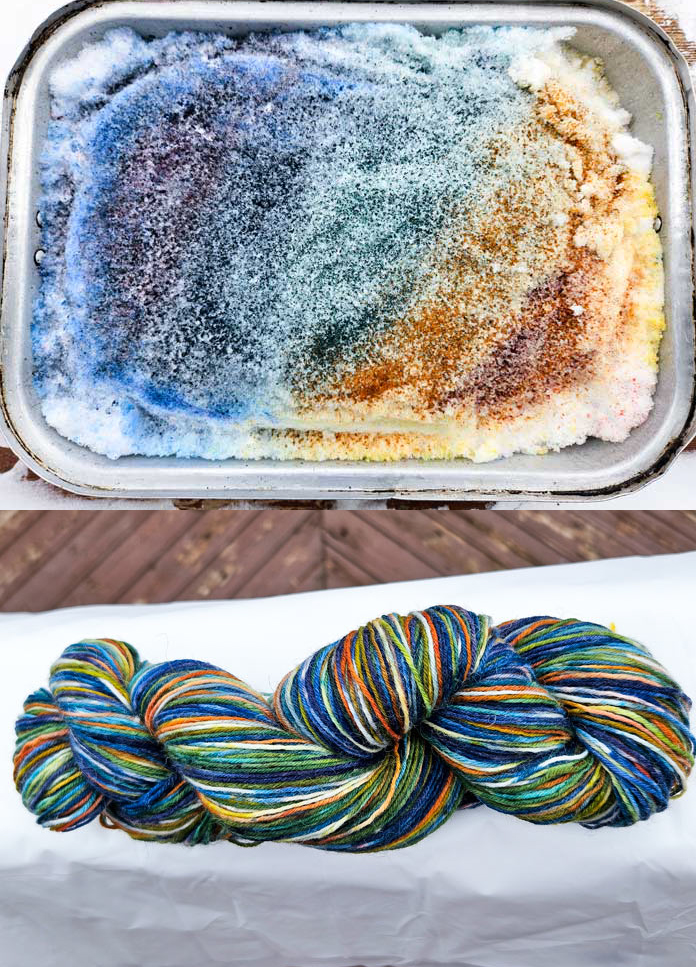
Dried skein of yarn highly variegated from the snow dyeing process
Bring the pan inside and let the snow melt slowly, keeping an eye on curious pets nearby. Once melted, transfer the brightly colored yarn into a sealed bag. Steam it over a pot of simmering water for about an hour to set the color permanently. Rinse under cold water until it runs clear, then hang the skein to dry. Any leftover dye puddled at the bottom of the pan doesn’t have to go to waste. A scrap of cotton yarn soaked in salt water can pick up a whole second color from those last few drops.
Warp paint for graduated stripes
Warp painting works best with yarn already wound to length for weaving. Soak the wound yarn in a hot water and vinegar bath. Then lay it out on plastic over a protected surface. Mix liquid dye into squeeze bottles and apply it directly along the length of the yarn in loose sections. Squish two colors together at their borders on purpose, since that overlap creates entirely new blended tones along the stripe. Wrap each colored section in plastic and coil it up. Steam it the same way as the snow-dyed yarn to set the color. Rinsed and dried, the yarn becomes warp with soft, whimsical color transitions running through every stripe.
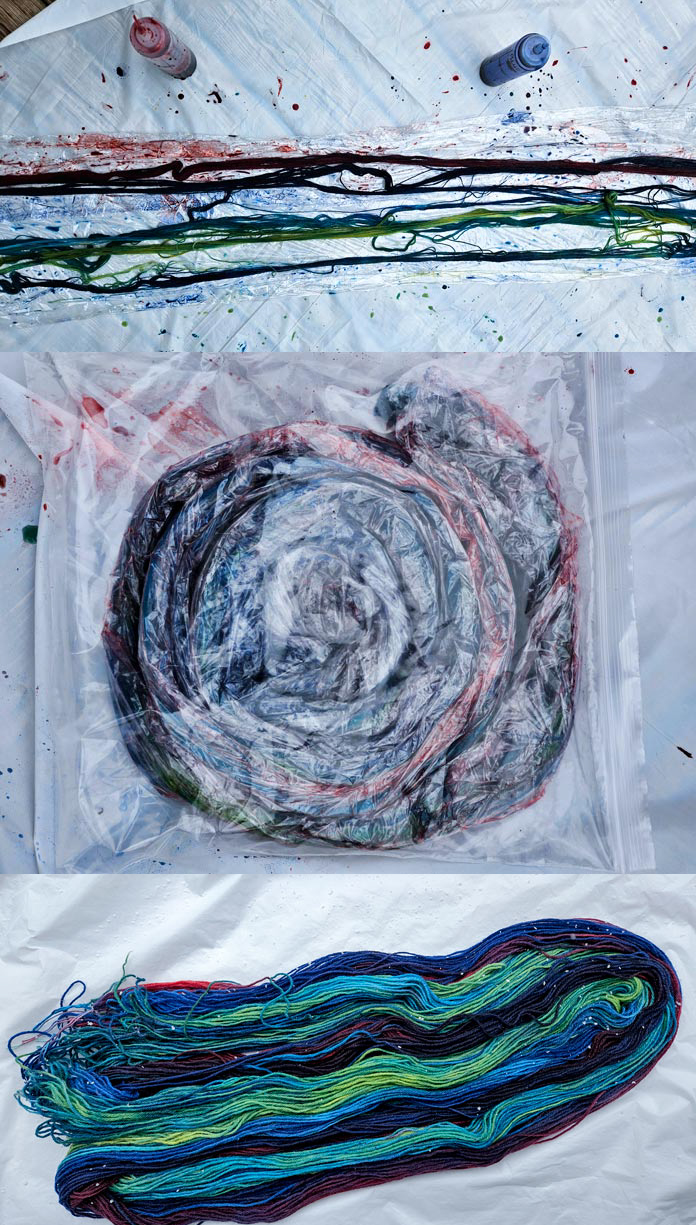
The color transition of the stripes is exactly what I was hoping to achieve.
Kettle dye for smooth, even color
Kettle dyeing is the simplest of the three methods, and it produces the most even, solid color. Add hot water and liquid dye to a slow cooker, keeping the water temperature at a minimum of 140°F. Add the presoaked yarn and let it cook for several hours, or even overnight. Let it cool and dry afterward. A color that comes out lighter than hoped is nothing to worry about. Simply add a bit more dye along with a splash of vinegar. Focus it on any pale spots, then run the yarn through the process a second time for deeper, more even color.
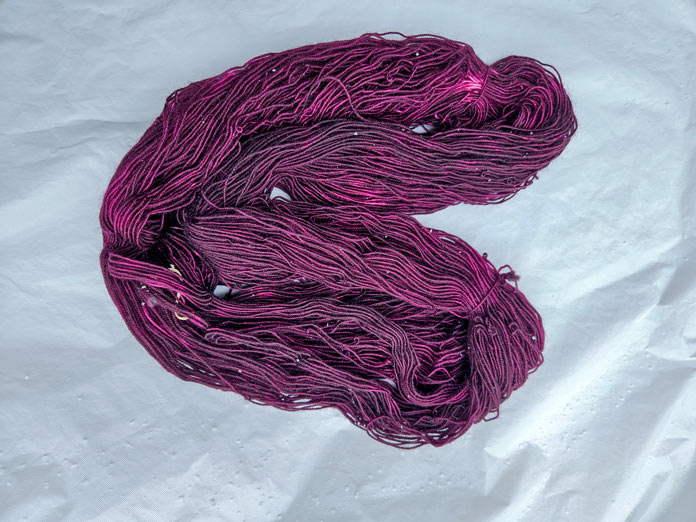
The dried skein of Superwash Merino dyed with Rit All Purpose Dye in Eggplant.