
Some yarns are just built for stitch work. A bamboo-cotton blend is one of them. The combination of bamboo and cotton creates a yarn that is smooth, slightly lustrous, and wonderfully clear. Every stitch reads sharply, and lace patterns look especially crisp. After spending a week knitting several different stitch patterns with this fiber, the verdict is clear: if you want your stitches to stand out, this is the yarn to reach for.
This series covers five different aspects of this yarn: the Clematis Cowl project and gauge tips, the Waffle Stitch, the Ocean Lace Stitch, the fiber properties and who it suits best, and the Fern Grotto Lace Stitch. Together, they build a thorough picture of what this bamboo-cotton blend can do.
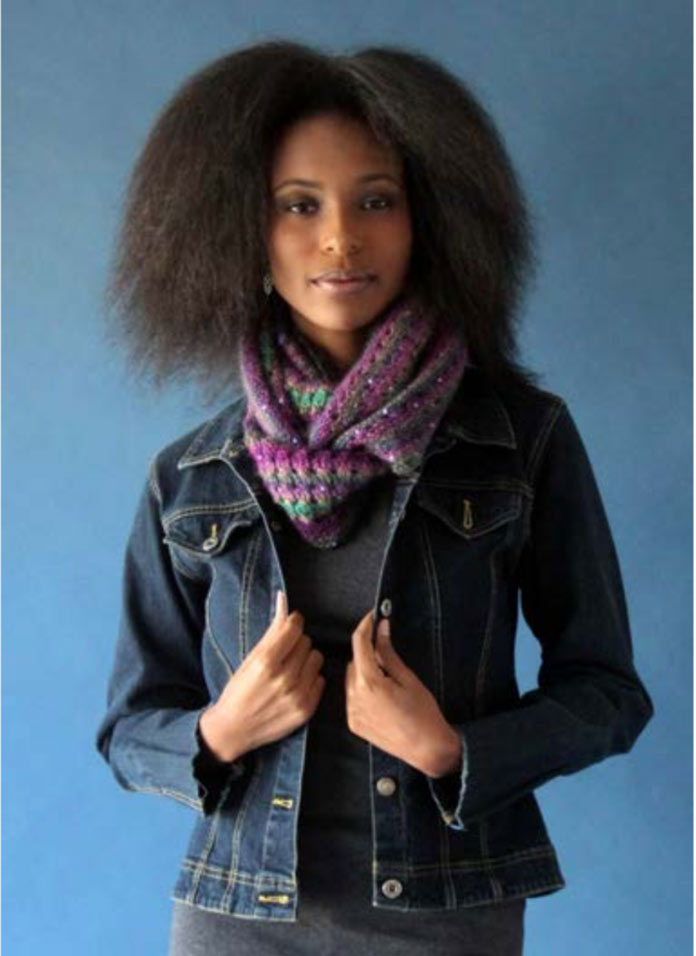
The Clematis Cowl written for Classic Shades Sequins Lite
materials
yarn
- bamboo-cotton blend DK weight yarn, approximately 3.5 oz [100g] / 292 yds [267m] per skein
- available in a wide range of solid and variegated colorways
needles and notions
- US Size 4 [3.5mm] circular needles, 16″ [40.6cm] for cowl
- tapestry needle for weaving in ends
- stitch markers
The Clematis Cowl: A Lace Pattern That Truly Shines
The first project in this series was the Clematis Cowl, a free pattern featuring a twisting eyelet lace stitch that closely resembles the structure of a bamboo stitch but with yarn overs added throughout. The result is a light, open, and rhythmic fabric that keeps knitting engaging without ever becoming difficult to track.
Two solid colors worked in alternating rows give the cowl an extra layer of depth. The smooth, slightly shiny surface of the bamboo-cotton blend lets the lace definition read beautifully, and the color contrast adds visual interest that would be lost with a fuzzier or more matte fiber. The pattern is written for a larger yarn, so if a bigger cowl with more drape is the goal, simply cast on additional stitches.
The finished cowl is slightly smaller in circumference than the original pattern specifies. Even so, it wraps around the neck twice and closes neatly. For wearing under a coat to block cold drafts, the size is just right. The piece still stretches enough to pull over the head with ease, even without much give in the fabric.
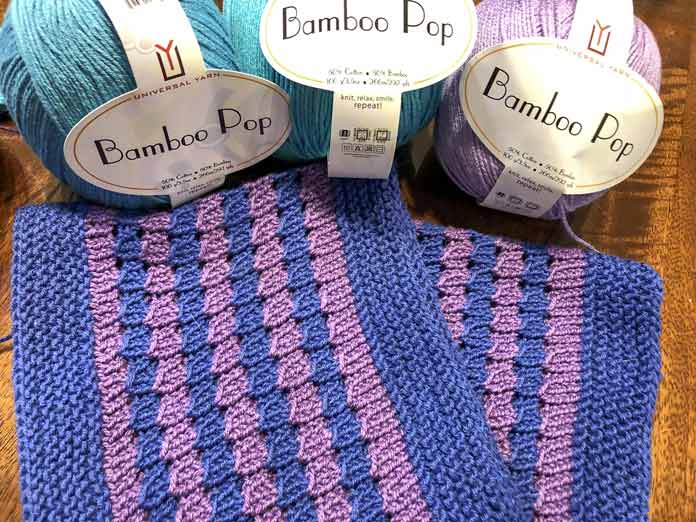
The Clematis Cowl knit in Bamboo Pop
Needle Size and Gauge: Why Cotton Changes the Rules
The Clematis Cowl pattern calls for US Size 4 [3.5mm] needles, which produce a good fabric with this yarn. That said, working at a slightly looser gauge is worth considering. Here is the reason: bamboo adds softness and drape, but cotton has no stretch. A tight gauge with cotton puts real strain on the hands over time. Knitters who naturally work with a firm tension should pay attention to this.
A relaxed gauge keeps the knitting comfortable throughout the project and helps the finished cowl retain some give. The fiber itself will close up slightly in the wash, so there is no benefit to fighting for a tight gauge during knitting. Ease up, let the stitches sit naturally on the needle, and trust the process.
If planning to substitute this yarn into a pattern written for a different fiber, always swatch. The stitch definition on this yarn makes the gauge very readable. Cast on at least 30 stitches and knit a generous swatch before measuring. A swatch knit at a comfortable tension will tell you exactly where you stand.
The Waffle Stitch: Subtle Texture with Big Appeal
After the cowl, the next stitch tested was the Waffle Stitch. It consists of a four-row repeat: two rows of stockinette stitch followed by two rows of K2 P2 ribbing. This combination creates a dimpled, thermal-fabric look that is cozy and familiar without being complicated. The stitch uses multiples of four stitches, making it easy to fit into almost any garment without significant adjustments.
Because bamboo-cotton does not have the springiness of wool, the Waffle Stitch reads as a more relaxed, less rigid texture than it would in a bouncy fiber. That quality actually works in its favor. The stitches sit quietly rather than aggressively popping forward, giving the fabric a refined, understated look. For variegated colorways especially, this is ideal. The texture adds interest without competing with color changes.
The best stitches are those that do not demand constant concentration but still look thoughtful once complete. The Waffle Stitch is exactly that. It is easy to memorize after a single repeat and can be added into almost any garment needing a subtle textural element.
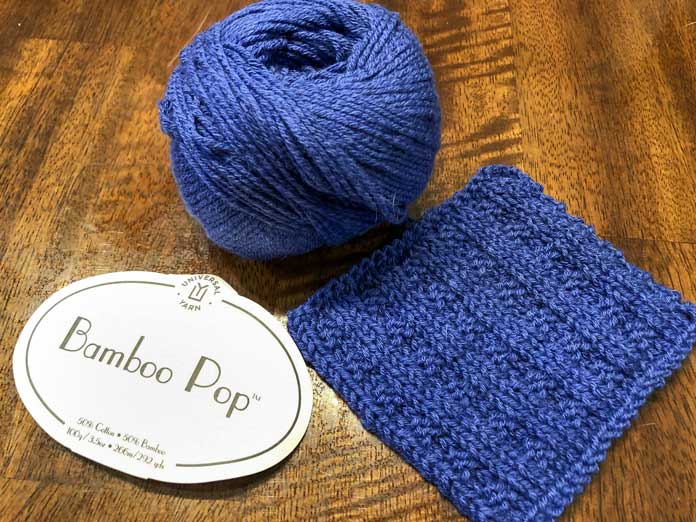
Bamboo Pop in the color Royal worked with a Waffle stitch
The Ocean Lace Stitch: Where This Yarn Really Performs
Lace is where this bamboo-cotton blend truly excels. The Ocean Lace stitch, drawn from a well-known knitting stitch reference book, is an eight-row pattern in which the lace repeats on the same single row throughout. The lace itself is made up of yarn overs combined with left-leaning and right-leaning decreases (SSK and K2TOG).
Because this yarn is smooth and slightly lustrous, the direction of the decreases shows up with exceptional clarity. SSK leans left. K2TOG leans right. In a fuzzier yarn these two stitches might look similar enough to be interchangeable. In this blend, the mixing is immediately visible. Pay close attention to which decreases the pattern calls for in each position.
The sheen of the yarn acts almost like a lighting effect on the lace structure. Raised portions catch the light. Depressed areas fall into shadow. The result is a lace fabric that looks three-dimensional even though it is perfectly flat. Light or medium colorways show the structure most clearly, but even deeper shades benefit from the bamboo’s reflective quality.
For anyone new to lace and hesitant to start a large project, knitting swatches in this yarn first is highly recommended. The cotton fiber base makes these swatches practical as well — cotton is an excellent fiber for dishcloths and face cloths, so no swatch goes to waste.
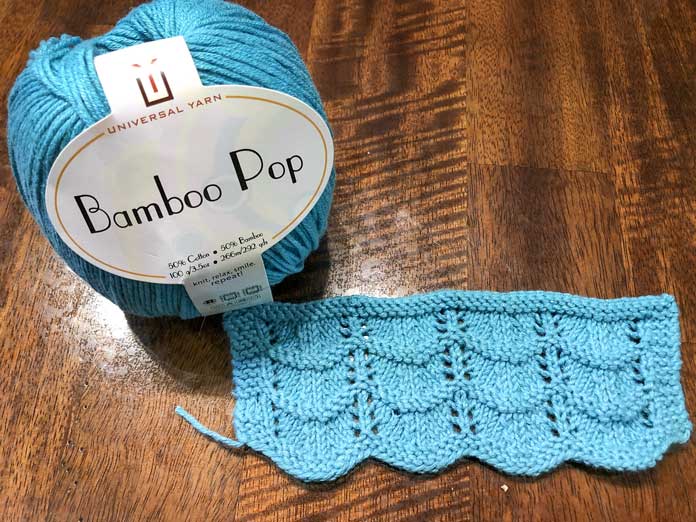
Ocean lace stitch in the color Turquoise. It really reminds me of the ocean!
Who Should Knit with a Bamboo-Cotton Blend
Beyond stitch definition and looks, this yarn earns its place in a knitting bag for practical reasons. Both cotton and bamboo are naturally hypoallergenic and antimicrobial. For anyone knitting for a friend who reacts to wool, or for a baby with sensitive skin, this is exactly the fiber to choose. There is no risk of reaction, and the antimicrobial quality means the finished garment does not need to be washed as frequently.
Cotton and bamboo also reduce the risk of skin rashes when a garment is worn directly against the body for extended periods. For baby blankets and items worn next to sensitive skin, this matters considerably more than it might for an outer layer.
The softer feel of the bamboo component makes this blend significantly more comfortable than plain cotton yarn. Anyone who has tried to knit with a stiff 100% cotton will appreciate the difference immediately. The bamboo smooths out the texture and adds enough drape to make garments flow rather than hold a rigid shape.
There is also a sustainability angle worth noting. Bamboo is a fast-growing plant that does not need to be killed to harvest. After cutting, the plant regrows within months. For gift knitting where the recipient cares about environmental impact, this is a genuine selling point.

The colors featured here are Grape and Royal.
The Fern Grotto Lace Stitch: Elevated Texture
The final stitch tested was the Fern Grotto Lace stitch, also from the same stitch reference book used for the Ocean Lace. Where the Ocean Lace reads as a flat, flowing pattern, the Fern Grotto has more vertical movement. The stitches appear to travel downward through the fabric, creating a cascading effect reminiscent of water or fern fronds. At first glance, it looks like it might involve cables. It does not. The visual depth comes entirely from the arrangement of the decreases and yarn overs.
The shininess of the bamboo-cotton blend plays a key role here too. Every raised portion of the stitch catches the light, and the spaces between fall into relative shadow. The effect is similar to contouring: the highlights and shadows work together to make the texture look more three-dimensional than it actually is. Even the garter stitch border around the swatch shows this quality, with the purl bumps gleaming and the valley between them receding.
For a blanket or large wrap, the Fern Grotto pattern would be stunning. The repeating cascades of the stitch would draw the eye beautifully across a wide expanse of fabric. Adding yarn overs between the repeats would open the pattern even further for a lighter, airier result.

Fern Grotto lace in the color Grape
Final Thoughts
Knitting with a bamboo-cotton blend is a genuinely rewarding experience from cast-on to bind-off. The yarn handles smoothly, shows off every stitch with clarity, works beautifully in both lace and textured patterns, and suits a wide range of recipients. It is also practical: hypoallergenic, antimicrobial, sustainably sourced, and more comfortable than plain cotton.
Whether you choose a free cowl pattern, a Waffle Stitch accessory, or a lace project, this fiber will make the stitches look their best. Swatch first, work at a relaxed tension, and enjoy the process. The results are well worth it.