
A soft chainette yarn with a subtle sparkle sets the stage for this lacy summer layering piece. This post swatches for gauge, knits two lace panels at once, then joins and finishes them into a breezy top perfect for warm weather.
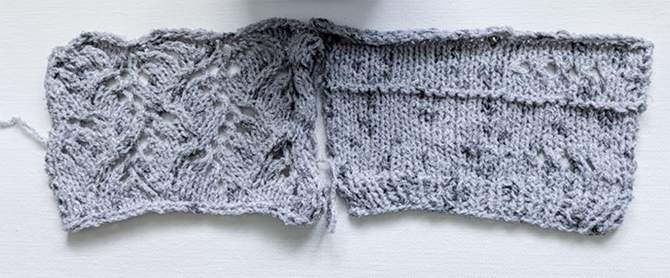
My two knitted swatches: one worked in a lace pattern, the other in stockinette stitch.
About chainette yarn
A lightweight chainette yarn makes an ideal choice for a breezy layering piece, like the Cygnus Top by Afifa Sayeed. This blend combines organic cotton, polyamide, and a touch of metallic fiber for a subtle sparkle. The chainette construction gives the yarn more stretch than a twisted cotton yarn would have. A soft, light grey colorway pairs easily with warm-weather outfits, and the metallic fiber catches the light without looking flashy.
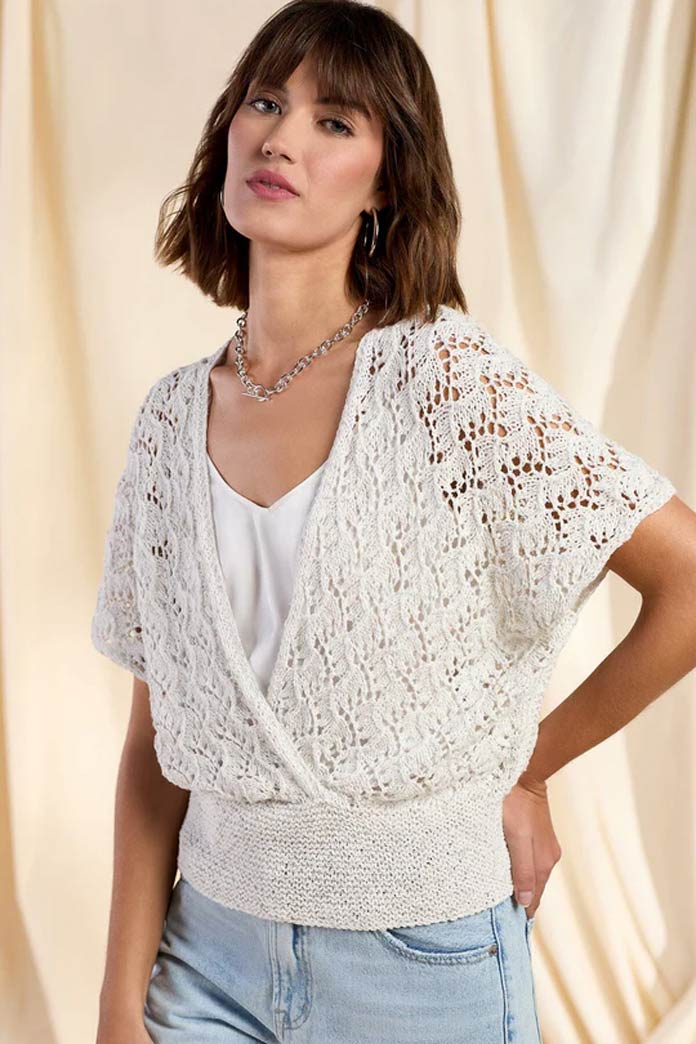
Cygnus Top is a lovely spring and summer knit.
Swatch and choose a size
Before casting on, swatch in both stockinette and the lace pattern the project calls for. A US 5 [3.75mm] needle works well for a simple stockinette check. Smooth, blunt-tipped circular needles suit this yarn better than sharp metal points. Sharp tips tend to snag the fine threads inside the chainette construction.
Measure gauge over the washed and blocked lace swatch, since blocking changes the fabric significantly. This particular pattern recommends choosing a size 4 to 6” [10.2 to 15.2cm] smaller than your actual chest measurement. The lace opens up considerably once it is worn and blocked.
Knit the lace panels
With gauge confirmed, it’s time to start the top itself. This lacy layering top knits up from just a few simple rectangular panels, balanced by an intricate lace stitch pattern. It’s designed to sit over a sleeveless top, a sundress, or even a simple T-shirt.
Read through the whole pattern before casting on to spot any construction quirks early. Sewing a seam in a yarn this textured can add unwanted bulk. Working both side panels with live stitches instead of a bound-off edge allows for a seamless join later. Use a provisional cast-on to keep the stitches live at the starting edge.
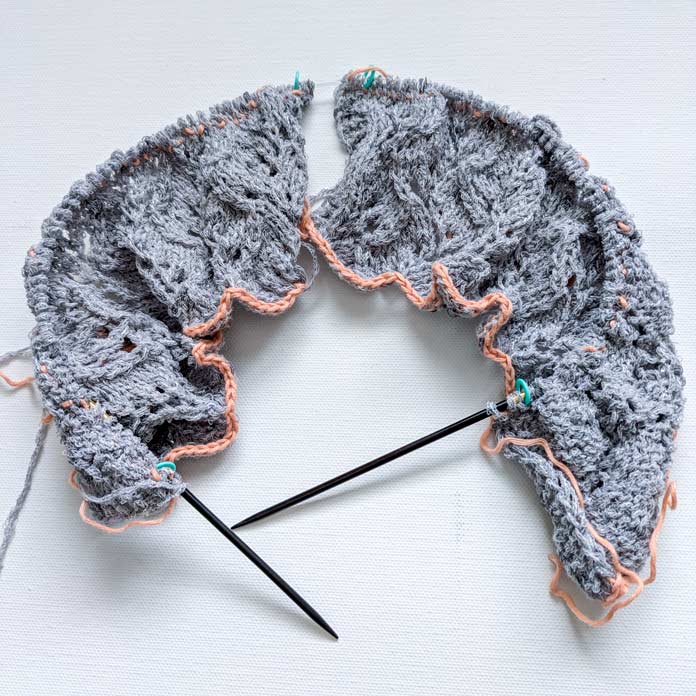
Two pieces of knitted lace fabric on the same circular needle.
Cast on the required stitch count for your size onto scrap yarn. Then cast on the same count again on a second strand. Working two identical panels at once, from two separate balls of yarn, keeps any mistakes mirrored between them rather than affecting only one panel.
The lace pattern reads differently on the right side and the wrong side, so keep close attention to both. Placing a lifeline every few pattern repeats offers peace of mind. If a stitch needs ripping back later, the lifeline marks safe ground to return to. Continue until each panel measures about 31”. Then place the live stitches on scrap yarn using a provisional bind-off. Washing and blocking the panels before finishing makes the final seaming and picking up stitches much easier.
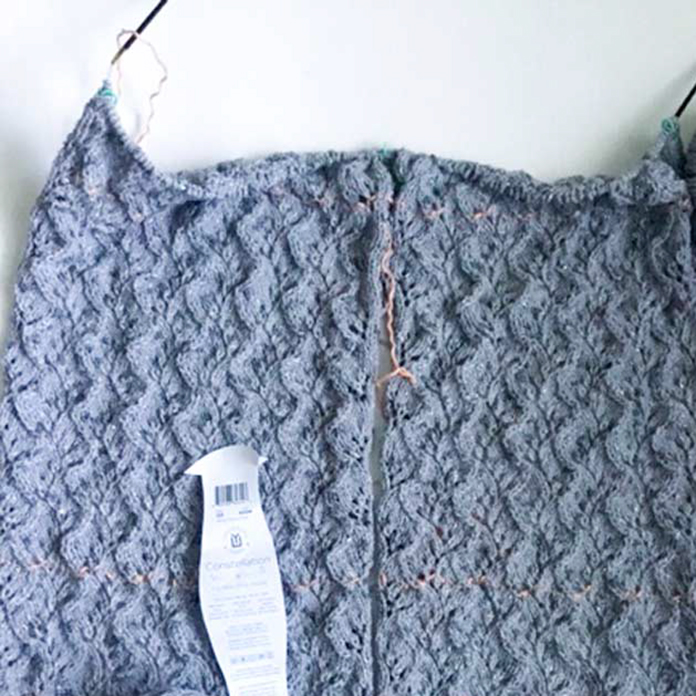
Two lace panels are worked at the same time on the needles.
Seam and finish the top
Once the panels are washed, blocked, and dry, join them using a three-needle bind-off at both the cast-on and bind-off edges. Bind off a set number of stitches on each side as usual. Then bind off the center stitches of both panels together, which creates an invisible, flat join between the front and back.
For the side seams, skip sewing entirely. A crochet hook and a slip stitch worked on the wrong side join the front to the back. This method leaves a flat seam that adds no extra bulk.
Pick up stitches evenly around the bottom edge to work a garter stitch band in the round. Switching to a needle one size smaller here helps keep the garter band from stretching out of shape over time. A visible jog can appear where knit rounds meet purl rounds when working garter stitch in the round. Working with two separate balls of yarn solves this, one ball for the knit rounds and one for the purl rounds. Pick up the new working yarn from under the previous one at each switch, and the transition disappears entirely.
Try on the top before binding off the band, and adjust the length as needed. Since there’s no shaping in this section, lengthening or shortening it is simple. A final gentle wash in a wool-safe detergent gives the finished piece its best drape and texture.
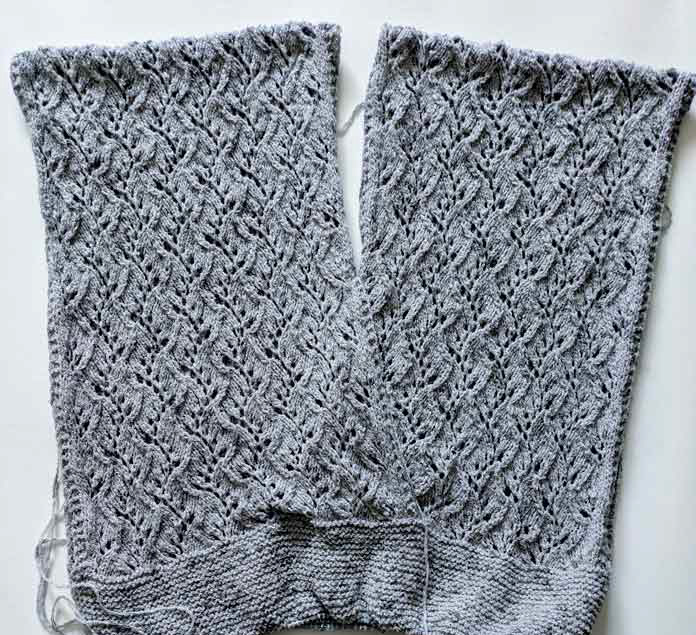
The lace panels are attached, and the garter stitch band is in progress.